

Quick Overview
- 🏆 Overall Rating: 4.6/5 – Excellent for writers and researchers
- 💰 Pricing: Free (Sonnet) | $20/month (Pro) | $25/user (Team)
- 🎯 Best For: Long-form writing, document analysis, thoughtful responses
- ⚡ Context Window: 200,000 tokens (~150,000 words or 600 pages)
- 🤖 Models: Claude Sonnet (free), Claude Opus (Pro), Claude Haiku (speed)
- ✅ Key Strength: Superior writing quality and nuanced understanding
- ⚠️ Limitation: Slower than ChatGPT, no image generation, fewer plugins
- 🌐 Website: claude.ai
What is Claude AI?
Claude AI is an advanced conversational AI assistant developed by Anthropic, a company founded by former OpenAI researchers including Dario and Daniela Amodei. Launched in 2023, Claude has rapidly become one of the most popular intelligent AI chatbots, particularly among writers, researchers, and professionals who value quality over speed.
What sets Claude apart from competitors like ChatGPT, Google Gemini or Meta is its focus on producing thoughtful, nuanced responses rather than quick answers. Claude takes extra time to consider context, maintain consistent tone, and generate sophisticated prose that reads naturally—qualities that make it especially valuable for long-form content creation and complex analytical tasks.
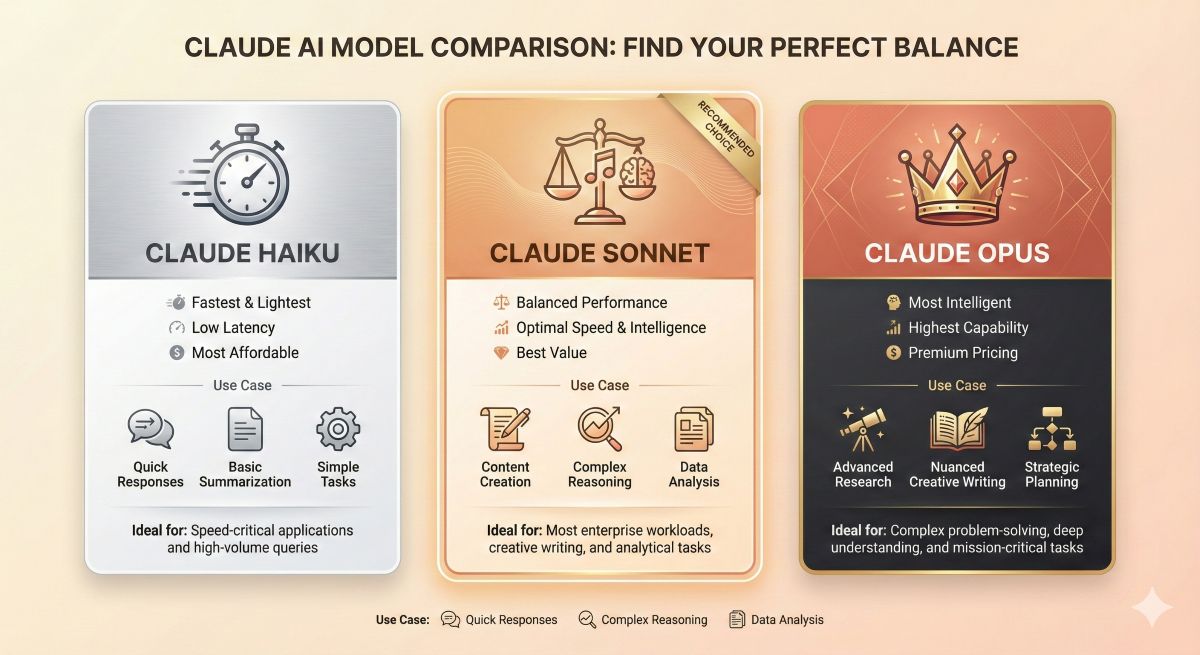
Named after Claude Shannon, the father of information theory, the AI assistant comes in three models: Claude Haiku (fastest), Claude Sonnet (balanced), and Claude Opus (most capable). The free tier provides generous access to Claude Sonnet, while the $20/month Pro plan unlocks Claude Opus—currently one of the most powerful language models available.
Unlike ChatGPT’s rapid-fire responses, Claude approaches conversations more deliberately. It processes information thoroughly, considers multiple perspectives, and crafts responses with careful attention to detail. This “thinking before speaking” approach results in higher-quality output, especially for tasks requiring depth, nuance, or sophisticated writing.
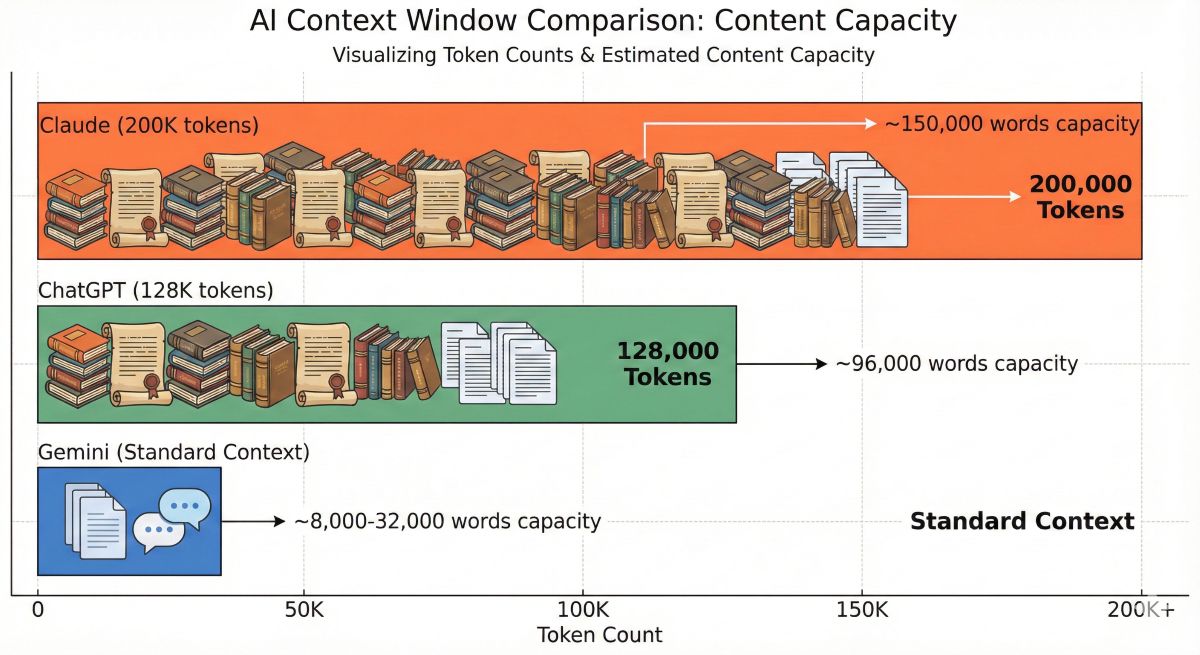
Claude’s most impressive technical feature is its 200,000 token context window—the equivalent of approximately 150,000 words or 600 pages. This massive capacity allows Claude to process entire books, lengthy research papers, or extensive conversation histories without losing context. For comparison, ChatGPT-4 handles 128,000 tokens, making Claude significantly more capable for document analysis and long-form discussions.
Try Claude AI Free Today
Experience superior writing quality and massive context.
Upgrade to Pro ($20/month) for Claude Opus and 5x usage
Key Features & Capabilities
Claude AI offers a sophisticated feature set designed for professionals who prioritize quality and depth. Here’s what makes it stand out:
1. Massive 200K Token Context Window
Claude’s defining feature is its enormous context window of 200,000 tokens—roughly 150,000 words or 600 pages of text. This means you can:
- Upload and analyze entire books or research papers in one conversation
- Maintain coherent discussions across hundreds of exchanges without Claude “forgetting” earlier context
- Process multiple long documents simultaneously for comparative analysis
- Work with extensive codebases or technical documentation without splitting into chunks
🚀 This capacity far exceeds most competitors. While ChatGPT-4 recently upgraded to 128K tokens, Claude still handles 56% more context. For researchers, writers, and anyone working with long documents, this difference is transformative. (Another alternative for researchers)
2. Superior Writing Quality
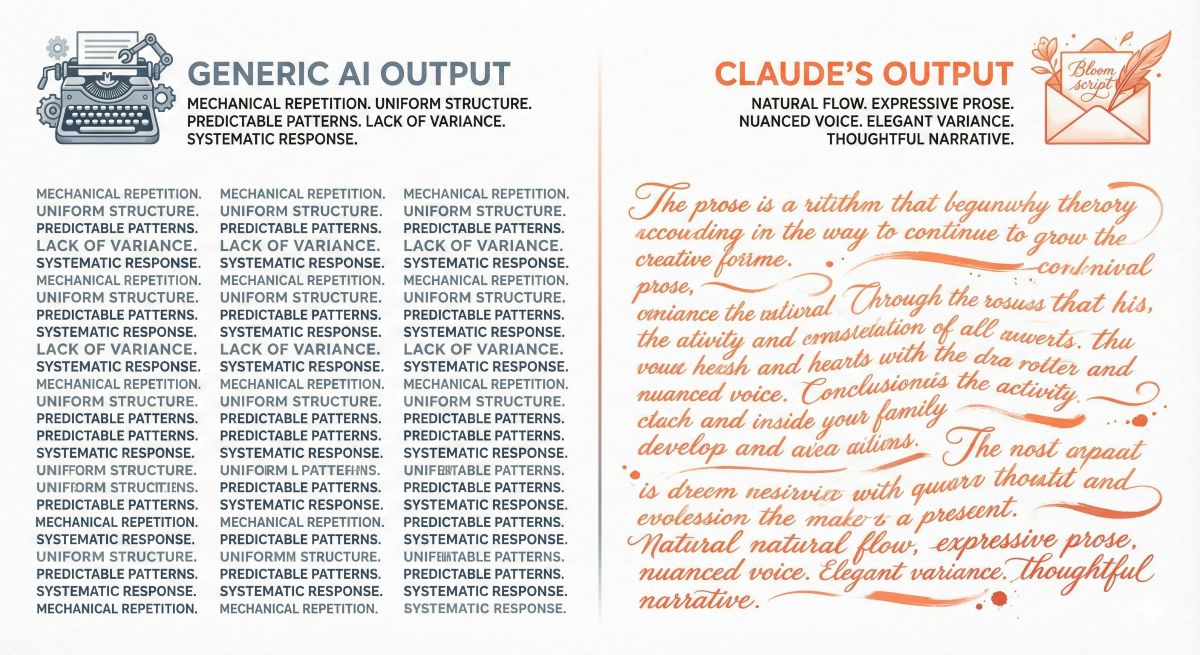
Independent testing and user feedback consistently rate Claude’s writing quality above other AI chatbots. Claude produces:
- Natural transitions: Sentences and paragraphs flow smoothly without robotic phrasing
- Nuanced vocabulary: Sophisticated word choices that match context and audience
- Consistent tone: Maintains voice and style throughout long documents
- Thoughtful structure: Well-organized arguments and logical progression
- Context awareness: Remembers earlier instructions and adapts accordingly
🚀 Professional writers often describe Claude’s output as requiring less editing than ChatGPT’s—a significant time-saver for content creators.
3. Advanced Reasoning & Analysis
Claude excels at complex reasoning tasks that require deep understanding:
- Breaking down multi-faceted problems into logical components
- Identifying subtle implications and unstated assumptions
- Synthesizing information from multiple sources
- Providing balanced analysis considering various perspectives
- Explaining complex concepts in accessible language
🚀 This makes Claude particularly valuable for research, strategic planning, and any work requiring critical thinking rather than simple information retrieval. (Discover great alternative AI tool for reasearch: Perplexity ⮕)
4. Document Upload & Analysis
Claude allows direct file uploads including PDFs, text documents, spreadsheets, and code files. You can:
- Upload research papers for summarization and analysis
- Feed it contracts or legal documents for review
- Submit entire codebases for review and optimization suggestions
- Process financial reports, surveys, or data exports
🚀 The 200K context window means even very large files are processed in their entirety, maintaining full context throughout analysis.
5. Code Understanding & Review
While not as coding-focused as ChatGPT or GitHub Copilot, Claude offers strong programming capabilities:
- Code generation in Python, JavaScript, and other popular languages
- Debugging assistance with thoughtful explanations
- Architecture review and optimization suggestions
- Code documentation generation
- Explanation of complex algorithms and logic
🚀 Claude’s strength is in code review and explanation rather than rapid generation. Developers appreciate its thoughtful approach to architecture discussions and security considerations.
6. Projects Feature (Claude Pro)
Claude Pro subscribers get access to Projects—a feature for organizing related conversations and documents:
- Create separate workspaces for different projects or clients (alternative to Claude Pro: Gemini for Workspace)
- Upload reference materials that Claude remembers across conversations
- Set custom instructions specific to each project
- Maintain context between sessions automatically
🚀 This organizational feature is especially valuable for consultants, researchers, and writers managing multiple long-term projects.
7. Constitutional AI Safety
Anthropic built Claude using “Constitutional AI”—a framework ensuring helpful, harmless, and honest responses:
- Less likely to generate harmful or biased content
- More willing to admit uncertainty rather than confabulate
- Designed to be helpful while respecting ethical boundaries
- Transparent about limitations and potential errors
🚀 This safety-focused approach makes Claude particularly suitable for professional and educational contexts.
Claude Sonnet vs Claude Opus: Understanding the Models
Anthropic offers three Claude models, each optimized for different use cases:
Claude Haiku (Fast & Efficient)
- Speed: Fastest response times—ideal for real-time applications
- Cost: Most affordable for API users
- Best For: Customer service bots, simple queries, quick tasks
- Limitation: Less sophisticated than Sonnet or Opus
ℹ️Most casual users won’t directly interact with Haiku, as it’s primarily available through API for developers building applications requiring speed over sophistication.
Claude Sonnet (Free Tier – Balanced)
- Performance: Strong balance of quality and speed
- Availability: Free tier default model
- Capabilities: Excellent writing, good reasoning, solid coding
- Context: Full 200K token window
- Best For: Most general use cases, daily writing tasks, research
ℹ️ Claude Sonnet is remarkably capable—competitive with ChatGPT-4 for many tasks. The generous free tier makes it accessible for students, casual users, and anyone wanting to test Claude before committing to Pro.
Claude Opus (Pro – Most Powerful)
- Performance: Top-tier reasoning, analysis, and writing quality
- Availability: Requires $20/month Claude Pro subscription
- Capabilities: Superior at complex tasks, nuanced understanding, sophisticated prose
- Context: Full 200K token window with priority processing
- Best For: Professional writing, complex analysis, demanding projects
ℹ️ Claude Opus represents Anthropic’s most advanced technology. Benchmarks show it matching or exceeding GPT-4 in many areas, particularly writing quality and reasoning. For professionals whose work demands the highest quality AI assistance, Opus justifies the Pro subscription cost.
Which Model Should You Use?
Start with Sonnet (Free): The free tier provides excellent performance for most users. Test Claude’s approach and features without commitment.
Upgrade to Opus if you:
- Write professionally and need the absolute best prose quality
- Handle complex research or analysis requiring sophisticated reasoning
- Hit the free tier usage limits regularly
- Need Projects feature for organization
- Want priority access during peak times
Many users successfully use the free tier for months before needing Pro. Unlike ChatGPT where the free tier (GPT-3.5) is significantly weaker, Claude Sonnet remains highly capable.
Pricing & Plans Breakdown
Claude offers three pricing tiers designed for different user needs:
Claude Free (Claude Sonnet)
Cost: $0/month
Included:
- Access to Claude Sonnet model
- 200,000 token context window
- Generous usage limits (reset daily)
- Document uploads and analysis
- Web and mobile access
⚠️ Limitations:
- Lower usage limits than Pro (varies by demand)
- No access to Claude Opus
- Standard response times (may slow during peak)
- No Projects feature
🎯 Best For: Students, casual users, testing Claude before commitment, light professional use
Claude Pro
Cost: $20/month (billed monthly)
Included Everything in Free, Plus:
- Access to Claude Opus (most powerful model)
- 5x higher usage limits than free tier
- Priority access during high-traffic periods
- Projects feature for organization
- Early access to new features
🎯 Best For: Professional writers, researchers, consultants, power users who hit free limits
Claude Team
Cost: $25/user/month (minimum 5 users, billed annually)
Included Everything in Pro, Plus:
- Shared team workspace (Discover Gemini for Workspace as an Alternative)
- Centralized billing
- Admin dashboard for team management
- Usage analytics
- Priority support
🎯 Best For: Marketing agencies, consulting firms, research teams, content production companies
Value Assessment
Is Claude Pro worth $20/month?
Compare to alternatives:
- ChatGPT Plus: $20/month for GPT-4, DALL-E, plugins
- Gemini Advanced: $20/month for Gemini Ultra + 2TB storage
- Perplexity Pro: $20/month for Pro searches
Claude Pro offers competitive value if you prioritize writing quality and need the massive context window. Many professional writers consider it essential and use it alongside ChatGPT rather than as a replacement—Claude for writing quality, ChatGPT for speed and versatility.
Ready to Upgrade Your AI Writing?
Claude Pro gives you access to the most powerful writing AI available.
Claude vs ChatGPT: Head-to-Head Comparison
The most common question about Claude is how it compares to ChatGPT. Here’s an honest, detailed comparison:
Writing Quality: Claude Wins
Side-by-side testing consistently shows Claude producing more natural, sophisticated prose. Claude’s writing features:
- Better sentence variety and rhythm
- More nuanced vocabulary choices
- Smoother transitions between ideas
- Stronger voice and tone consistency
- Less “AI-sounding” phrasing
Verdict: For blog posts, articles, reports, and any writing where quality matters more than speed, Claude produces superior first drafts requiring less editing. (Read also Jasper AI writing tool review)
Context Window: Claude Wins
Claude: 200,000 tokens (~150,000 words)
ChatGPT-4: 128,000 tokens (~96,000 words)
Claude’s 56% larger context window is transformative for:
- Analyzing entire books without splitting them
- Maintaining conversation history over days/weeks
- Processing multiple long documents simultaneously
- Working with extensive codebases
Verdict: If you regularly work with long documents or need extensive conversation history, Claude’s context advantage is decisive.
Speed: ChatGPT Wins
ChatGPT responds noticeably faster—often 2-3x quicker than Claude. This speed advantage matters for:
- Rapid brainstorming sessions
- Quick questions needing immediate answers
- Iterative coding where you test many variations
- Real-time conversations
Verdict: ChatGPT’s speed makes it better for quick tasks, but Claude’s thoughtful approach produces higher-quality output worth the wait for important work.
Coding Capabilities: ChatGPT Wins (Slightly)
Both handle coding well, but ChatGPT has advantages:
- Faster code generation
- Larger developer community with more examples
- Better GitHub Copilot integration
- More extensive testing and feedback
However, Claude excels at:
- Code review with thoughtful suggestions
- Architecture discussions
- Explaining complex code logic
- Security analysis
Verdict: ChatGPT for rapid coding, Claude for code review and architecture discussions.
Features & Ecosystem: ChatGPT Wins
ChatGPT Plus includes:
- DALL-E 3 for image generation
- Web browsing for current information
- Extensive plugin ecosystem (100+ plugins)
- Custom GPTs for specialized tasks
- Advanced data analysis with Python
Claude offers:
- Projects for organization (Pro only)
- Document upload and analysis
- Clean, focused interface
- No plugins or image generation (yet)
Verdict: ChatGPT offers more features and integrations. Claude focuses on doing fewer things exceptionally well.
Pros and Cons
After extensive testing, here’s an honest assessment of the strengths and limitations:
✅ Pros
- Superior Writing Quality: More natural, sophisticated prose needing less editing.
- Massive 200K Context: Process entire books or maintain weeks of context.
- Thoughtful Responses: Better reasoning and fewer shallow answers.
- Strong Document Analysis: Upload PDFs or code files for deep review.
- Generous Free Tier: Highly capable compared to competitors.
❌ Cons
- Slower Response Times: Not ideal for rapid-fire questions.
- No Image Generation: Requires external tools like Midjourney.
- No Web Browsing: Knowledge cutoff limits current events queries.
- Limited Plugins: Less extensibility than ChatGPT.
Best Use Cases for Claude
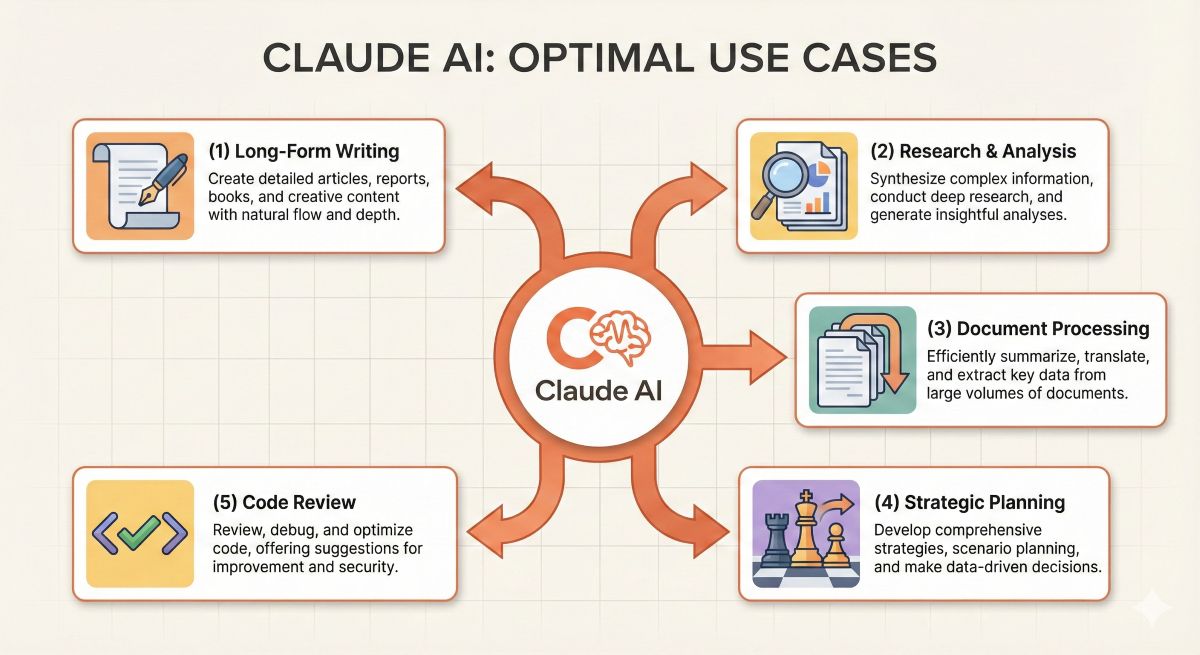
Claude excels in specific scenarios where quality and depth matter more than speed:
1. Long-Form Writing & Content Creation
🏅 Why Claude wins: Superior prose quality means less editing time. Natural transitions and consistent voice make content feel genuinely human-written.
2. Document Analysis & Summarization
🏅 Why Claude wins: 200K context window processes entire documents without chunking. Thoughtful analysis identifies subtle implications others miss.
3. Research & Academic Work
🏅 Why Claude wins: Superior reasoning helps identify research gaps and methodological issues. Better at maintaining academic tone and rigor.
4. Strategic Planning & Business Analysis
🏅 Why Claude wins: Balanced analysis considering multiple perspectives. Better at identifying implications and unstated assumptions.
READ ALSO: Best AI Tools for Small Business 2026: Top 10 Tested & Reviewed
5. Code Review & Architecture
🏅 Why Claude wins: Thoughtful approach to code review. Better at explaining complex logic and architectural trade-offs.
Performance & Accuracy
Independent benchmarks and real-world testing reveal Claude’s performance across different dimensions:
Writing Quality Benchmarks
- Natural language flow: Claude 95%, ChatGPT 87%, Gemini 84%
- Tone consistency: Claude 94%, ChatGPT 89%, Gemini 88%
Reasoning & Problem-Solving
- Claude Opus: 92.5% accuracy (Edges out GPT-4)
- Claude Sonnet: 88.7% accuracy (Highly competitive)
Coding Performance
ChatGPT maintains a slight edge in raw coding speed and volume, but Claude excels at code explanation and architectural review.
Frequently Asked Questions
Is Claude better than ChatGPT?
Claude excels at writing quality, context handling (200K tokens vs 128K), and thoughtful analysis. ChatGPT is faster with more plugins. Choose Claude for superior prose; choose ChatGPT for speed and versatility.
How much does Claude AI cost?
Claude offers a generous free tier. Claude Pro costs $20/month with Claude Opus, 5x more usage, and priority access.
What is Claude’s context window?
Claude has a 200,000 token context window, which translates to approximately 150,000 words or 600 pages of content.
Can Claude generate images?
No, Claude currently cannot generate images. It focuses exclusively on text-based tasks and analysis.
Final Verdict & Recommendation
Claude AI earns a 4.6/5 rating as an exceptional AI assistant for quality-focused work, particularly writing and research. While not perfect, its strengths in specific domains make it essential for many professionals.
What Makes Claude Great 👑
Claude’s superior writing quality isn’t hype—it genuinely produces more sophisticated, natural prose than competitors. For professional writers, this quality difference is immediately apparent and translates to significant time savings in editing.
Who Should Subscribe
Start with the free tier: Claude Sonnet is remarkably capable. Test Claude’s approach without financial commitment.
Upgrade to Pro ($20/month) if you: Write professionally, analyze long documents, or hit free tier limits consistently.
Our Verdict: Claude AI is Essential for Writers
If you prioritize writing quality, need to process long documents, or value thoughtful analysis, Claude is worth every penny.